
We are confronting an immense paradox at this moment in human history; we are more aware than ever of planetary interdependence, yet we remain structurally embedded in systems that deny it. Climate change, biodiversity collapse, soil depletion, ocean acidification, these are expressions of a deeper failure. We have inherited a worldview that understands life in fragments, while the conditions of our survival are fundamentally relational. It is here that we propose the microbiome offers both a scientific and philosophical framework for navigating this terrain.
At its most basic, the microbiome refers to the vast communities of microorganisms (bacteria, fungi, viruses, archaea) that inhabit all environments, including our own bodies. These passengers regulate immunity, digestion, nutrient cycles, atmospheric chemistry, and soil fertility. Increasingly, they are understood as constitutive of life itself. The human body, as microbiologist Lynn Margulis argued, is a symbiotic assemblage: “We are all lichens,” she wrote in her seminal book Symbiotic Planet, pointing to the boundary between organism and environment as a continuous field of exchange.
This notion destabilises one of our central myths; that of the autonomous individual. In microbiome science, there is no clean separation between self and other. The skin, the gut, the soil beneath our feet; these are porous interfaces through which life is constantly negotiated. The implications for ecology are profound. If the boundaries we rely on to organise the world are, in fact, provisional, then the faculties of domination — of extraction, sterilisation, control— begins to unravel. These are constructs, antithetical to our evolutionary impulses.
The environmental philosopher Timothy Morton offered a language for this shift. In The Ecological Thought, Morton describes ecology as the recognition that “everything is interconnected.” Far from an entirely harmonious vision, we must note that interconnection is strange, often uncomfortable; and it implicates us in systems we cannot fully perceive or control. The microbiome intensifies this insight, as it reveals that the very conditions of our health are entangled with microbial processes occurring at scales both microscopic and planetary.
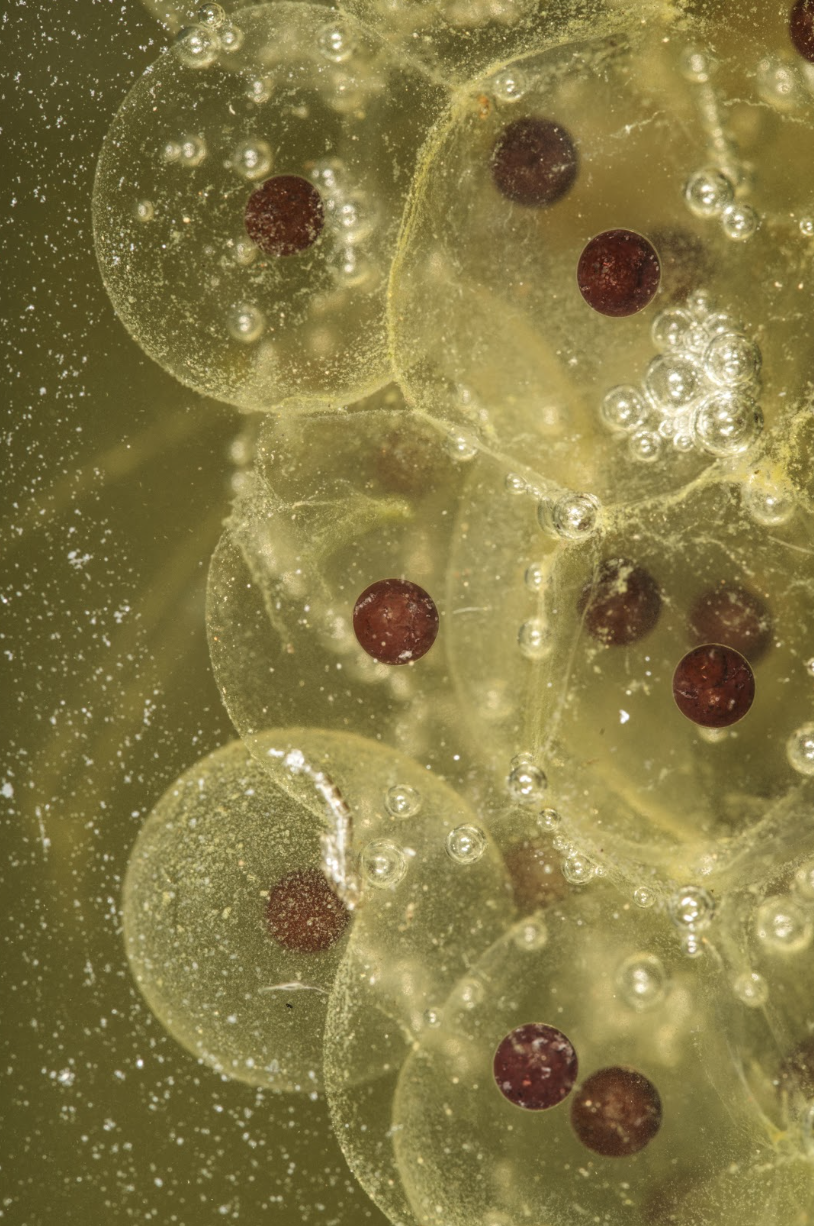
Consider soil. Often treated as an inert substrate in industrial agriculture, soil is in fact a living system, dense with microbial life that governs carbon storage, nutrient cycling, and plant health. As ecologist Vandana Shiva has long argued, the degradation of soil through chemical-intensive farming is a civilisational issue. To destroy soil microbiomes is to destabilise the very foundation of food systems, climate regulation, and human health.
Here, we believe that microbiome thinking begins to offer us all an alternative paradigm. Rather than viewing soil as something to be optimised through external inputs, regenerative agriculture works with microbial systems – composting, cover cropping, reduced tillage – to restore the biological complexity that underpins fertility. Carbon sequestration, in this context, emerges from the metabolic activity of soil organisms, and climate mitigation becomes a function of ecological restoration.
This approach resonates with the work of biologist Robin Wall Kimmerer, whose writing bridges scientific and Indigenous ecological knowledge. In Braiding Sweetgrass, Kimmerer articulates an ethic of reciprocity: “All flourishing is mutual.” While her focus is often on plants and ecosystems, the principle certainly extends to microbial life. To live well, in this framework, is to participate in cycles of exchange that sustain collective flourishing.
Climate change, then, can be understood as a breakdown in these relationships. Industrial systems, whether in agriculture, manufacturing, or urban design – have systematically reduced microbial diversity, simplified ecosystems, and disrupted the feedback loops that regulate planetary health.
Microbiome thinking might not offer a single solution to these crises, but it does reorient the question. Instead of asking how we can control or fix the environment, it asks how we might participate more intelligently within it. What would it mean to design systems (economic, agricultural, architectural) that support microbial life rather than suppress it? What forms of knowledge, practice, and governance would be required to sustain this shift?
Microbiomes are central to this possibility; they are resilient, adaptive, capable of rapid transformation. They remind us that life depends on the capacity to respond to change, and they demand our humility, as microbial systems operate at scales and complexities that exceed human comprehension. To work with them is to accept a degree of uncertainty, and to relinquish the illusion of total control.
This may be the most difficult shift of all. Modern human culture has been built on the promise of mastery; over nature, over disease, over the contingencies of life itself. To take this seriously is to require a restructuring of our values through an interdependent lens. It requires moving from extraction to regeneration, from isolation to interdependence, and from short-term optimisation to long-term resilience. It asks us to see ourselves beyond separate actors on a passive stage, and to imagine ourselves as the participants in a living, dynamic system that we actually are.
At MFI, the possibilities for planetary futures are not predetermined. They emerge from the choices we make about how to live within this system; how to design, cultivate, build, and care. Microbiome thinking recognises that the smallest forms of life may hold the key to sustaining the largest; there is no greater reminder of our entanglement with the natural world.
